


Unleashing Gaming Power: The Best Graphics Cards for Your PC
Understanding Graphics Cards
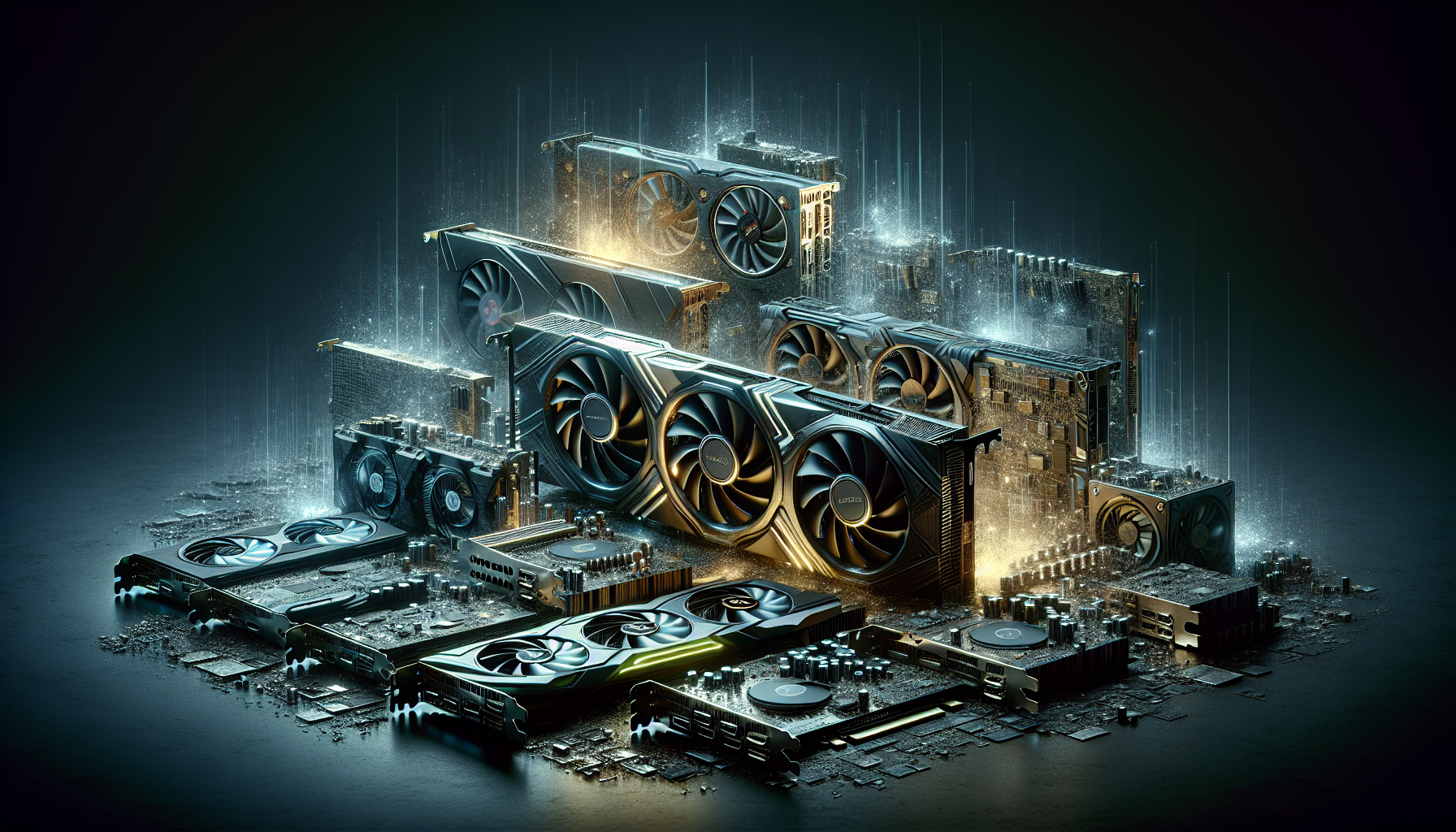
For PC gamers, the graphics card is not just a component; it's the heart of the gaming experience. This section will delve into the significance of graphics cards in gaming PCs and highlight the key manufacturers that dominate the market.
Importance in Gaming PCs
In the realm of custom PC building, the graphics card stands out as an essential element for any gaming enthusiast. It's responsible for rendering images, animations, and videos in games, thus determining the visual quality and smoothness of gameplay. A powerful graphics card can mean the difference between a laggy, pixelated experience and a smooth, immersive one.
As gaming evolves with more complex graphics and higher resolutions, the demand for robust graphics cards continues to soar. Gamers seeking to enjoy the latest titles in their full glory will need a card that can handle the graphically intensive tasks without compromising on frame rates. This is especially pertinent when considering gaming alongside gaming pc monitors that offer higher resolutions and refresh rates.
For those who are interested in competitive gaming or who simply enjoy the beauty of high-detail virtual worlds, investing in a high-quality graphics card is imperative. Not only does it improve the gaming experience, but it also adds value to the custom gaming pc as a whole.
Key Manufacturers
When it comes to selecting a graphics card for your gaming PC, the market is dominated by two main manufacturers: NVIDIA and AMD. Each of these tech giants offers a range of graphics cards that cater to various needs, from budget-friendly options to high-end powerhouses.
| Manufacturer | Market Share | Notable Series |
|---|---|---|
| NVIDIA | ~70% | GeForce RTX, GTX |
| AMD | ~30% | Radeon RX |
Data Source: GameCrate
NVIDIA, known for its GeForce RTX and GTX series, is renowned for its cutting-edge technology and features such as ray tracing, which simulates realistic lighting effects. On the other hand, AMD's Radeon RX series is celebrated for its excellent value and competitive performance levels.
Both manufacturers continually compete to push the boundaries of what's possible in game graphics, offering regular updates and innovations that keep gamers on the edge of their seats. As you consider your graphics card options, be sure to explore the latest offerings from these manufacturers, keeping in mind your budget and the performance you desire. You might also want to keep an eye on gaming pc deals to snag a top-performing graphics card at a competitive price.
In summary, whether you are an avid gamer looking to build your dream gaming setup or simply aiming to upgrade your current system, understanding the pivotal role of the graphics card and the key players in the market is your first step towards making an informed decision.
Factors Influencing Performance
In the realm of custom PC building, particularly for gaming purposes, the graphics card is a pivotal component that dictates the quality and smoothness of gameplay. Understanding the factors that influence the performance of gaming pc graphics cards is essential for gamers to make an informed decision when assembling or upgrading their custom gaming PC.
VRAM and Texture Handling
The amount of VRAM (Video Random Access Memory) is a critical specification of a graphics card. It serves as the storage for texture data and rendering components, which are essential for high-resolution gaming. VRAM is particularly important for games with detailed graphics and for playing at higher resolutions, such as 4K. As the resolution and texture quality increase, so does the requirement for more VRAM.
For example, a card with higher VRAM can store more textures, which can be rendered directly from the memory, resulting in quicker and smoother gameplay. In contrast, insufficient VRAM can lead to texture pop-in issues and frame rate drops. GameCrate provides insight into how VRAM impacts gaming performance.
Cooling Solutions
Graphics cards are high-performance components that generate substantial heat during operation. Efficient cooling solutions are therefore essential to maintain optimal performance and prevent thermal throttling. Many high-end graphics cards come with advanced cooling technologies such as liquid cooling or multiple fan systems.
The design of the cooling system can vary between manufacturers and specific card models. Some cards feature open-air coolers with one or more fans that blow air across the heatsink, while others may use blower-style coolers that exhaust hot air out of the PC case. The choice of gaming pc cases can also influence the effectiveness of a graphics card's cooling solution.
Power Requirements
High-end graphics cards often come with substantial power requirements. It's crucial to ensure the gaming PC's power supply can accommodate the power draw of the graphics card, which may include additional power connectors. The required wattage for a gaming PC's power supply typically increases with the performance caliber of the graphics card.
When planning a gaming PC build, it is advised to check the power consumption ratings and recommendations from the graphics card manufacturer. This ensures that the system will have enough power to run smoothly without overloading the power supply, which could lead to system instability or hardware damage.
In summary, when selecting a graphics card for a gaming PC, it is crucial to consider the amount of VRAM for handling high-resolution textures, an efficient cooling solution to manage heat output, and the power requirements to ensure system stability. Making the right choices in these areas will contribute significantly to a balanced and high-performing gaming experience. For more detailed guides on building your gaming PC, check out our gaming pc builder resources.
Top Choices for Gamers
Selecting the right graphics card is crucial for any gaming PC, enabling high-quality visuals and smooth gameplay. Gamers should consider their needs and budget when choosing a card, and with the array of options on the market, there's a solution for every level of performance and cost.
High-End Performance Picks
For gamers seeking the ultimate gaming experience, high-end graphics cards offer unparalleled performance. These cards ensure top-tier graphics, high frame rates, and cutting-edge features such as ray tracing.
| Graphics Card | Performance Features | Ray Tracing |
|---|---|---|
| NVIDIA GeForce RTX 3080 | Exceptional performance, suitable for demanding games | Yes |
| AMD Radeon RX 6900 XT | Impressive high-resolution gaming experience | Yes |
Both the NVIDIA GeForce RTX 3080 and the AMD Radeon RX 6900 XT are currently among the best graphics cards for gaming PCs, providing gamers with the ability to play the latest titles at the highest settings. Their advanced capabilities make them ideal for 4K and VR gaming, pushing the boundaries of what's possible in immersive gameplay.
Mid-Range Gaming Solutions
Mid-range graphics cards strike a balance between cost and performance, offering a quality gaming experience without the premium price tag of high-end models.
| Graphics Card | Performance Features | Ray Tracing |
|---|---|---|
| NVIDIA GeForce RTX 3060 Ti | Great performance with a more accessible price point | Yes |
| AMD Radeon RX 6700 XT | Good gaming performance, value-focused | No |
The NVIDIA GeForce RTX 3060 Ti and AMD Radeon RX 6700 XT are both solid choices for those who want a robust gaming experience (PC Gamer). They are well-suited for gamers who play a variety of titles, including those that require a bit more graphical power. These mid-range cards are also a good match for gaming pc monitors that support higher refresh rates but may not require 4K resolution.
Budget-Friendly Options
Budget graphics cards are designed for gamers who are mindful of their spending but still want a quality gaming experience. These options offer good performance on less demanding games or at lower resolutions.
| Graphics Card | Performance Features |
|---|---|
| NVIDIA GeForce GTX 1660 Super | Solid performance for cost-conscious gamers |
The NVIDIA GeForce GTX 1660 Super is a budget-friendly option that manages to deliver good gaming performance for those with tighter finances (PC Gamer). It's a suitable choice for casual gaming and can handle many popular titles with ease. For those looking to build or upgrade their custom gaming pc without a hefty investment, this card provides a practical solution without sacrificing too much on performance.
When considering a new graphics card, gamers should also think about gaming pc power supply requirements, as higher-performance cards often require more power. Balancing the graphics card with other components, such as gaming pc processors and gaming pc cases, ensures a well-rounded and efficient gaming rig.
Special Considerations for Gamers
For PC gamers, the graphics card is a pivotal component that can significantly enhance the gaming experience. Certain genres and advancements in gaming technology, such as 4K and virtual reality (VR), necessitate careful consideration when selecting a graphics card.
4K and VR Gaming
4K gaming is rapidly gaining popularity due to its stunning visuals and immersive experience. However, to enjoy games in 4K resolution, a powerful graphics card is essential. It must be capable of handling high-resolution textures and maintaining a smooth framerate. For VR gaming, the graphics card must go a step further, rendering two images simultaneously to create a realistic 3D environment.
According to PCMag, the Nvidia GeForce RTX 3090 is the premier choice for VR gaming, offering exceptional performance with its impressive 24GB of video memory, which is also future-proof for upcoming game titles. Alternatively, the AMD Radeon RX 6800 XT provides outstanding performance at competitive pricing.
For those seeking a more affordable VR experience, the Nvidia GeForce RTX 3070 offers admirable performance with ray tracing capabilities. Meanwhile, the AMD Radeon RX 6900 XT is a top-tier option for gamers aiming for the pinnacle of performance and features. On the budget-friendly end, the Nvidia GeForce GTX 1660 Super allows gamers to enjoy decent VR performance without a hefty investment.
When selecting a graphics card for 4K or VR gaming, it's essential to consider the compatibility with your gaming pc monitors as well as the rest of your system, to ensure a seamless and immersive gaming experience.
Balancing Price and Performance
The quest for the perfect balance between cost and performance is a common challenge for gamers. It involves weighing the benefits of higher-end graphics cards against their price tags. The key is to identify the level of performance necessary for the games you play and the level of visual fidelity you desire.
For gamers who prioritize ultra-high settings or who engage in competitive gaming where every frame counts, investing in a high-performance card may be worthwhile. However, for more casual gamers, a mid-range card might suffice, offering a satisfactory gaming experience without the financial strain.
Here's a comparison of some notable graphics card options based on their performance and cost:
| Graphics Card | VRAM | Performance Level | Ideal for |
|---|---|---|---|
| Nvidia GeForce RTX 3090 | 24GB | High-End | 4K and VR Gaming |
| AMD Radeon RX 6800 XT | 16GB | High-End | 4K Gaming |
| Nvidia GeForce RTX 3070 | 8GB | Mid-Range | High-Quality 1440p Gaming |
| AMD Radeon RX 6900 XT | 16GB | High-End | Top-of-the-Line Performance |
| Nvidia GeForce GTX 1660 Super | 6GB | Budget-Friendly | Entry-Level VR Gaming |
It's advisable to assess your gaming needs, consider future game releases, and review the latest gaming pc deals to make an informed decision. A well-chosen graphics card not only provides a fantastic gaming experience today but also ensures that your custom gaming pc remains capable of playing future titles for years to come.
Current Market Challenges
The market for graphics cards is undergoing significant challenges that affect gamers and PC enthusiasts looking to build or upgrade their systems. Two of the most pressing issues are supply shortages and price fluctuations.
Supply Shortages
The hunt for the best graphics cards is becoming increasingly difficult due to a series of supply shortages affecting both Nvidia and AMD's latest offerings. As reported by Tom's Hardware, the demand from both the gaming community and cryptocurrency miners has outstripped supply, leaving many consumers empty-handed.
The global semiconductor shortage is a key contributor to this scarcity, impacting graphics card production and availability. TechRadar highlights how this shortage has resulted in constrained supply lines, pushing the prices of available stock higher.
Furthermore, logistical challenges stemming from the global pandemic have exacerbated the situation, causing delays in the manufacturing process and distribution of new cards, as detailed by TechSpot.
To combat scalping and ensure fair distribution, some retailers have implemented lottery systems and anti-bot measures, which are strategies to deter bulk purchases and inflated resales (PCMag).
Price Fluctuations
The price of gaming pc graphics cards has been subject to significant volatility as a result of the aforementioned supply shortages. Guru3D notes that the ongoing supply chain issues have led to a rise in the cost of graphics cards, making it challenging for gamers to find affordable options.
The surge in demand from cryptocurrency miners has also driven up prices, with powerful GPUs being a crucial component for mining operations (CNBC). This situation has not only affected desktop graphics cards but also the availability and pricing of gaming laptops that depend on similar GPU technology (Digital Trends).
Gamers are often faced with the tough decision to either join waiting lists, pay premium prices from third-party sellers, or forego their preferred graphics card due to budget constraints (Eurogamer).
These market challenges highlight the importance of staying informed about gaming pc deals and considering various factors like gaming pc power supply and gaming pc cases when planning a custom gaming pc. Despite these hurdles, enthusiasts continue to seek out the best components to enhance their gaming experience, while hoping for a resolution to these market challenges.
Future-Proofing Your Gaming PC
In the realm of PC gaming, technology evolves rapidly, necessitating foresight and strategic planning to ensure that your gaming PC remains relevant and powerful for years to come. Here, we shall discuss the merits of investing in top-tier graphics cards and consider the importance of upgradability for future-proofing your gaming setup.
Investing in Top-Tier Cards
To ensure that your gaming PC stands the test of time, investing in a high-quality graphics card is essential. Top-tier cards offer cutting-edge technology and exceptional performance, which means they are better equipped to handle future game releases and advancements in graphics technologies.
For instance, the Nvidia GeForce RTX 3080 is heralded as the best overall gaming graphics card, boasting 10,496 CUDA cores and 30 Shader-TFLOPS, offering a stellar combination of performance and price (Tom's Hardware). Similarly, the AMD Radeon RX 6800 XT stands out as the best option for 4K gaming, equipped with 16GB of GDDR6 VRAM and 72 Ray Accelerators designed to enhance ray tracing performance, providing a remarkable visual experience in high-resolution gaming scenarios.
| Graphics Card | Best For | CUDA Cores/Ray Accelerators | Shader-TFLOPS | VRAM |
|---|---|---|---|---|
| Nvidia GeForce RTX 3080 | Overall Gaming | 10,496 CUDA cores | 30 | 10GB GDDR6X |
| AMD Radeon RX 6800 XT | 4K Gaming | 72 Ray Accelerators | N/A | 16GB GDDR6 |
| Nvidia GeForce RTX 3070 | 1440p Gaming | 5,888 CUDA cores | 20 | 8GB GDDR6 |
| AMD Radeon RX 5700 XT | VR Gaming | N/A | N/A | 8GB GDDR6 |
| Nvidia GeForce RTX 3060 Ti | Budget Gaming | 4,864 CUDA cores | 16 | 8GB GDDR6 |
By opting for a high-end graphics card, gamers can delight in the enhanced capabilities that come with such an investment, such as improved frame rates, higher resolutions, and more intricate graphical details. Moreover, to keep your gaming setup in step with new titles and visual standards, consider exploring gaming pc monitors that complement your graphics card's capabilities.
Considering Upgradability
Anticipating future developments in the gaming industry is key when assembling a custom gaming pc. Upgradability should be at the forefront of any PC gamer's mind. This involves selecting components that not only meet current gaming demands but also provide the flexibility to upgrade as needed.
To facilitate future upgrades, gamers should consider the following:
- Motherboard Compatibility: Ensure that the motherboard has the requisite slots and ports to support newer graphics card models. Researching potential gaming pc brands can guide you towards motherboards that offer long-term compatibility.
- Gaming PC Power Supply: Higher-end graphics cards typically demand more power. Opt for a power supply with a higher wattage than your current needs to accommodate future upgrades.
- Case Size: A spacious gaming pc case is crucial, as some high-end graphics cards are larger in size. Ensuring ample room for upgrades can save you from the inconvenience of having to replace your case down the line.
When planning for upgradability, it's wise to also consider the potential resale value of your current graphics card. As new technologies emerge, selling your old card can help fund an upgrade without incurring the full cost of the latest model.
By focusing on the long-term and choosing components that offer the best performance now while allowing for future enhancements, gamers can build a PC that will continue to deliver a top-tier gaming experience for years to come. For those looking to create such a build, gaming pc builder resources are invaluable, providing insights and recommendations to help you assemble a gaming PC that's both powerful and future-proof.


