


Unleash Your Potential: Embrace the Cutting-Edge Technology of Computer Systems Labs
The Significance of Computer Systems Labs
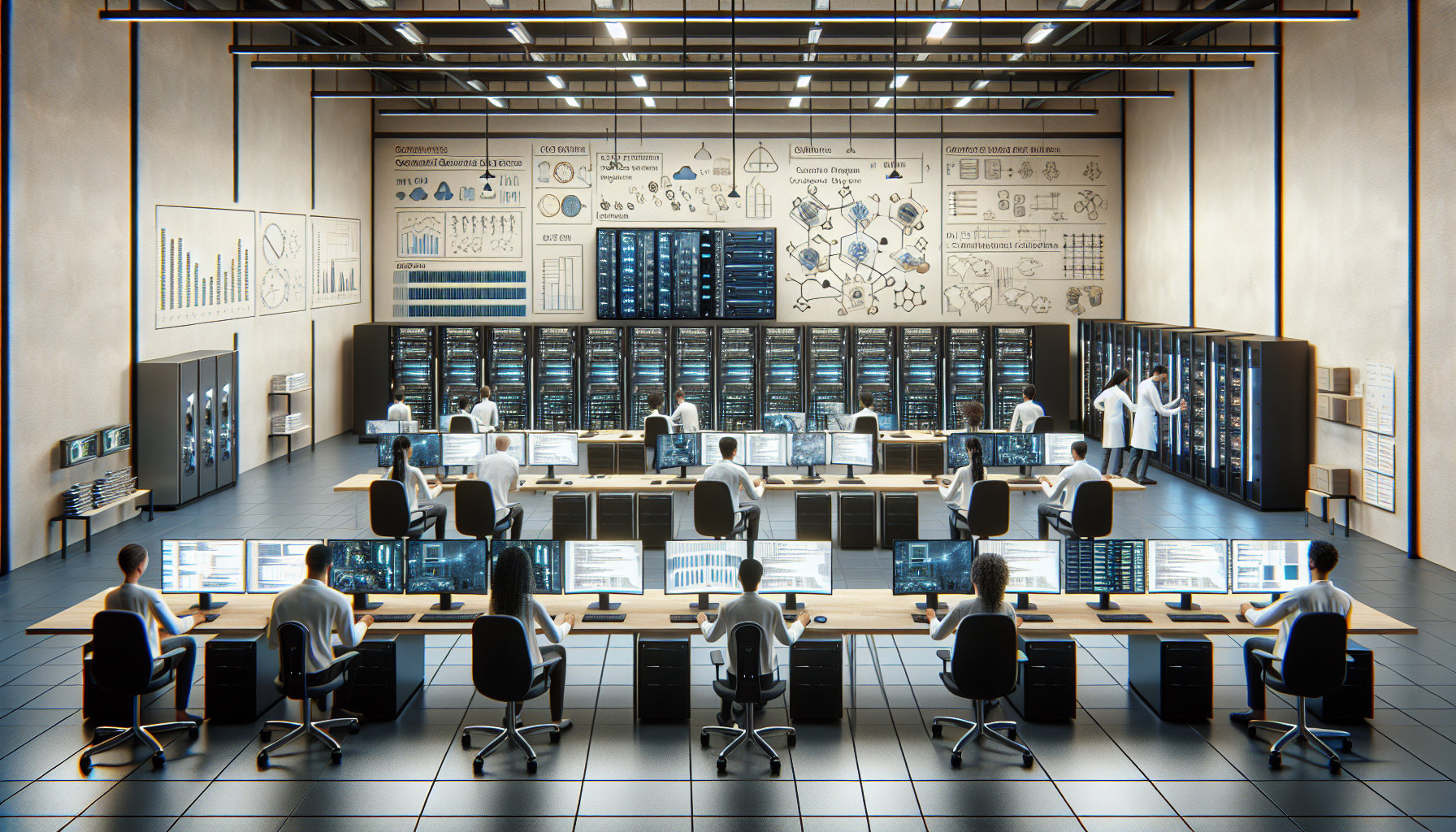
Computer systems labs are the breeding grounds for innovation and development in the field of information technology. They are crucial for the advancement of computer systems technology, providing environments where complex simulations, testing, and research can take place.
The Evolution of Computer Systems Labs
The evolution of computer systems labs has been a journey from small rooms filled with bulky hardware to modern facilities that house state-of-the-art equipment and software. Initially, these labs were the domain of university research departments and exclusive industries. However, they have progressively become more accessible and now play a pivotal role in the IT infrastructure of various organisations.
In the past, computer labs were defined by their massive mainframes and limited by their computing power. Over time, advancements in computer systems hardware and software frameworks have transformed them into highly efficient and powerful environments. These advancements have allowed for the emergence of advanced computer systems that can handle complex tasks with greater ease and precision.
| Era | Key Characteristics |
|---|---|
| 1980s | Mainframe dominance, limited access |
| 1990s | Onset of personal computing, networked systems |
| 2000s | Rise of internet connectivity, server-client models |
| 2010s | Cloud computing, virtualisation, AI integration |
The Role of Computer Systems Labs in Corporations
In the corporate landscape, computer systems labs serve as central hubs for technological growth and support. They provide the infrastructure necessary for the development of new software, the testing of IT solutions, and the training of personnel. Corporations rely on these labs to stay at the forefront of IT innovation and maintain competitive advantage.
Computer systems labs offer a controlled environment where corporations can simulate real-world scenarios, assess the performance of computer systems, and ensure that their IT strategies align with business objectives. They also play a critical role in data analysis and decision-making processes, leveraging tools from computer systems technology to extract actionable insights.
Moreover, these labs are integral in the area of security. With cyber threats ever on the rise, labs provide facilities to test security measures and ensure compliance with industry regulations. They help IT departments in corporations understand and implement the necessary protocols to protect their associated computer systems.
As corporations continue to embrace digital transformation, the reliance on computer systems labs is only set to increase. They are not just a luxury but a necessity for businesses looking to innovate and optimise their operations in the information age. Understanding how do computer systems work and the importance of why do computer systems need primary storage is essential for IT professionals working in these environments. For those seeking assistance, options such as computer system repair near me can provide localised support and computer systems servicing to ensure labs operate at peak efficiency.
Core Components of Computer Systems Labs
A computer systems lab forms the backbone of modern IT infrastructure, housing the essential components that drive innovation and efficiency. Understanding the core elements that constitute these labs is critical for IT Purchase Departments, especially those in corporations within Australia.
Hardware Essentials
The foundation of any computer systems lab is its hardware. Essential hardware components include high-performance servers, data storage solutions, workstations, and networking devices. The selection of hardware must align with the lab’s objectives, whether it's for research, development, testing, or educational purposes.
| Component | Function |
|---|---|
| Servers | Host applications and services |
| Storage | Securely store data |
| Workstations | Enable development and testing |
| Networking Devices | Manage data transfer and system communication |
For detailed insights into the types of hardware suitable for different lab functions, IT departments can explore computer systems hardware.
Software Frameworks
Software frameworks provide the necessary tools for developers and engineers to build and test applications efficiently. These include operating systems, development environments, database management systems, and collaboration tools. The choice of software should promote robustness and ease of use to facilitate productivity.
An in-depth exploration of software choices is available in our article on associated computer systems.
Networking and Connectivity
Connectivity is the lifeline of a computer systems lab. Networking components such as routers, switches, and firewalls are responsible for establishing internal and external communication channels. It's vital to ensure that the lab's network is both resilient and secure to support the flow of data and maintain the integrity of the systems.
For those interested in learning more about the networking aspect, the article on how do computer systems work offers additional information.
The components listed are not exhaustive but provide a glimpse into the complex infrastructure that makes up a computer systems lab. Corporations looking to set up or upgrade their labs must consider these core components to create an environment conducive to technological advancement and success. Additional resources and guidance on implementing and maintaining computer systems labs can be found by exploring topics such as advanced computer systems and computer systems servicing.
Advantages of Modern Computer Systems Labs
Today's computer systems labs represent a leap forward in technology, offering numerous benefits that can significantly enhance the operational capabilities of a corporation. These labs are designed to support a wide range of computing tasks, from simple data processing to complex problem-solving.
Enhanced Productivity
One of the primary advantages of modern computer systems labs is the substantial increase in productivity they provide. With state-of-the-art hardware and software, tasks that once took hours can now be completed in minutes. This speed is achieved through powerful processors, high-speed memory, and efficient storage solutions. For example, a complex data analysis that may have taken a full day can now be performed in less than an hour, thanks to the latest advancements in computer systems technology.
Additionally, with easy-to-use interfaces and automation capabilities, employees can focus on more strategic tasks rather than getting bogged down with routine processes. This not only improves workflow but also reduces the potential for human error.
Scalability and Flexibility
Modern computer systems labs are built with scalability and flexibility in mind. They can be easily upgraded or expanded to meet the growing demands of a business. Whether it's adding more processing power, increasing storage capacity, or incorporating new functionalities, these labs can adapt to the ever-changing needs of a corporation.
The modular nature of many computer systems allows for a custom setup that can be tweaked as necessary without disrupting the existing workflow. This is particularly beneficial for corporations that experience seasonal fluctuations or are on a growth trajectory.
| Aspect | Benefit |
|---|---|
| Processing Power | Can be scaled to handle increased workloads |
| Storage Capacity | Expandable to accommodate larger datasets |
| Functionalities | Adaptable to include new software or technologies |
Security and Compliance
In an age where data breaches and cyber threats are commonplace, security is a top priority for any corporation. Modern computer systems labs are equipped with robust security measures to protect sensitive data and ensure compliance with industry regulations.
From advanced firewalls to encryption technologies, these labs provide multiple layers of protection against external and internal threats. They also come with comprehensive audit trails and access controls, ensuring that only authorized personnel can access critical systems and data.
Corporations can also benefit from regular computer systems servicing to keep their systems updated with the latest security patches and compliance standards. By prioritizing security and compliance, businesses can safeguard their reputation and avoid costly penalties.
Modern computer systems labs are an essential asset for corporations seeking to maintain a competitive edge. By harnessing the benefits of enhanced productivity, scalability, flexibility, security, and compliance, companies can unleash their full potential and drive innovation forward.
Cutting-Edge Technologies in Computer Systems Labs
Computer systems labs are the nerve centres for technological advancement and innovation within many corporations. By integrating cutting-edge technologies, these labs enable businesses to stay at the forefront of industry developments and maintain a competitive edge.
Cloud Computing and Virtualization
Cloud computing and virtualization have revolutionized the way computer systems labs operate by providing scalable resources that can be accessed on demand. Cloud services offer a plethora of advantages including cost savings, as there is less need for physical hardware, and flexibility, allowing for the virtual lab environments to be tailored to specific project needs.
| Technology | Advantages |
|---|---|
| Cloud Computing | Scalability, Flexibility, Cost-efficiency |
| Virtualization | Resource Optimization, Energy Savings, Quick Provisioning |
In a cloud environment, virtualization technologies create a simulated, digital-only "lab" that can be accessed from anywhere, reducing the need for physical space and enabling remote collaboration. For a deeper understanding of how these technologies can optimise a computer systems lab, one can explore various service models such as Infrastructure as a Service (IaaS), Platform as a Service (PaaS), and Software as a Service (SaaS).
Artificial Intelligence and Machine Learning
Artificial Intelligence (AI) and Machine Learning (ML) have become integral to modern computer systems labs. These technologies empower corporations to process large datasets, automate routine tasks, and make data-driven decisions.
AI and ML can be applied in various facets of business operations, from customer service automation to predictive maintenance. They enhance the ability of computer systems labs to not only analyse but also anticipate trends and outcomes, leading to more innovative solutions and products.
For those interested in implementing AI and ML into their computer systems, articles such as advanced computer systems and computer systems technology offer valuable insights into the latest advancements and applications.
The Internet of Things (IoT)
The Internet of Things (IoT) connects a network of devices and sensors, enabling them to communicate with each other and with central computer systems. In a laboratory setting, IoT can significantly enhance operational efficiency and data collection accuracy.
| Application | Impact |
|---|---|
| Smart Sensors | Real-time Data Collection, Improved Accuracy |
| Connected Devices | Enhanced Collaboration, Streamlined Processes |
IoT devices in computer systems labs can monitor and adjust environmental conditions, ensure equipment is functioning optimally, and provide real-time analytics for ongoing experiments or projects. This interconnected web of devices creates a more responsive and adaptive lab environment. To explore how IoT integrates with existing computer systems, one can delve into the specifics of smart lab design and the role of IoT in data analysis.
By embracing cloud computing, AI, ML, and IoT, computer systems labs can significantly advance their capabilities. These technologies not only improve efficiency but also open up new avenues for research and development. IT departments looking to upgrade or establish a computer systems lab should consider these technologies to ensure their corporation remains at the cutting edge of innovation.
Implementing Computer Systems Labs
Creating a computer systems lab involves careful planning, strategic investment, and ongoing support to ensure that the lab meets current needs and is prepared for future advancements in technology.
Planning and Designing a Lab
The initial step in establishing a computer systems lab is to meticulously plan and design the space and resources needed. This process should start with a clear understanding of the lab's objectives and the tasks it will perform. Key considerations include the number of users it will support, the types of computer systems that will be used, and the specific software and networking infrastructure required.
When planning the layout, workspace ergonomics, adequate power supplies, and efficient cooling systems must be considered to create an environment conducive to productivity and comfort. It's also essential to plan for growth to allow for the incorporation of advanced computer systems as technologies evolve.
Building a Cost-Effective Computer Systems Lab
Constructing a computer systems lab that is cost-effective without compromising on quality is a balancing act. One approach is to focus on scalability, opting for modular hardware and software components that can be upgraded or expanded as needed. This ensures that the lab stays relevant and can adapt to changing technologies without requiring a complete overhaul.
Investing in multipurpose tools and computer systems hardware that can handle a variety of tasks can also help to reduce costs in the long term. Additionally, sourcing components from leader computer systems providers who offer competitive pricing and robust support can lead to significant savings.
| Item | Initial Cost (AUD) | Maintenance Cost (AUD/year) | Upgrade Cost (AUD) |
|---|---|---|---|
| Workstations | 1,500 | 150 | 500 |
| Servers | 3,000 | 300 | 1,000 |
| Networking | 2,000 | 200 | 700 |
| Software Licenses | 500 | 100 | 200 |
Training and Support for IT Teams
A computer systems lab is only as effective as the IT team that manages it. Therefore, investing in comprehensive training and support for IT personnel is crucial. Training should cover the lab's specific hardware and software, as well as general principles of how do computer systems work and computer systems technology.
Support can come in various forms, including ongoing training sessions, access to online resources, and partnerships with computer systems servicing companies. This ensures that IT teams are equipped to handle routine maintenance, troubleshoot issues, and keep the lab running smoothly.
| Training Category | Hours | Cost (AUD) |
|---|---|---|
| Hardware Setup & Maintenance | 20 | 1,000 |
| Software Management | 15 | 750 |
| Networking & Security | 25 | 1,250 |
Implementing a computer systems lab is a strategic move that can significantly enhance an organisation's capabilities. By following these guidelines for planning, cost management, and training, corporations can ensure that their investment in a computer systems lab is both effective and future-proof.
Future Trends in Computer Systems Labs
Computer systems labs are at the forefront of technological evolution, continuously integrating cutting-edge developments to meet the ever-growing demands of various industries. As we look to the future, there are several trends that promise to redefine the landscape of these tech hubs.
Sustainable Computing
Sustainable computing is set to become a pivotal trend in computer systems labs. The focus on eco-friendly practices is driven by the increasing need to reduce the carbon footprint of IT operations. This trend involves not only optimizing energy consumption through efficient hardware and cooling systems but also adopting renewable energy sources where possible.
In the context of sustainable computing, the following aspects are being closely monitored and improved:
- Energy-efficient processors and servers
- Advanced cooling techniques to reduce energy usage
- Use of recycled materials in manufacturing computer components
- Software optimization for reduced power consumption
Awareness of the environmental impact of technology is growing, leading labs to seek ways to minimize their ecological footprint. For more insights into eco-friendly IT solutions, explore our article on sustainable computing.
Quantum Computing
Quantum computing represents a significant leap forward for computer systems labs. With the capability to process complex computations at speeds unfathomable by traditional computers, quantum computing is poised to revolutionize areas such as cryptography, drug discovery, and financial modeling.
The core of quantum computing lies in its use of quantum bits, or qubits, which can represent multiple states simultaneously, enabling exponential scaling in processing power. The following table outlines the key differences between classical and quantum computing:
| Aspect | Classical Computing | Quantum Computing |
|---|---|---|
| Data Handling | Binary (0 or 1) | Qubits (0 and 1 simultaneously) |
| Speed | Determined by processor clock speed | Potentially millions of times faster |
| Use Cases | General-purpose | Complex problem solving |
For a deeper understanding of how quantum computing may impact your organization, read our article on quantum computing.
Emerging Innovations
Emerging innovations are constantly shaping the future of computer systems labs. Developments in areas such as edge computing, bioinformatics, and neural networks are expanding the possibilities for data processing and analysis.
These innovations include but are not limited to:
- Edge computing, which brings data processing closer to the source of data generation, reducing latency and bandwidth usage.
- Bioinformatics, which leverages computational power to solve biological problems, enabling advancements in healthcare and medicine.
- Neural networks and deep learning, which simulate human brain function to improve machine learning and artificial intelligence (AI) capabilities.
As these technologies mature, computer systems labs will likely integrate them to provide more sophisticated and specialized services. To stay updated on the latest trends in technology, consider browsing through our selection of articles, such as emerging innovations in computer systems.
The future trends in computer systems labs are a testament to the dynamic nature of the IT industry. By staying abreast of these developments, corporations can ensure that their computer systems labs remain at the cutting edge, fostering innovation and maintaining a competitive edge in the market.


