


Empowering Your Choice: RTX 4090 vs RTX 5090 - Crucial Differences
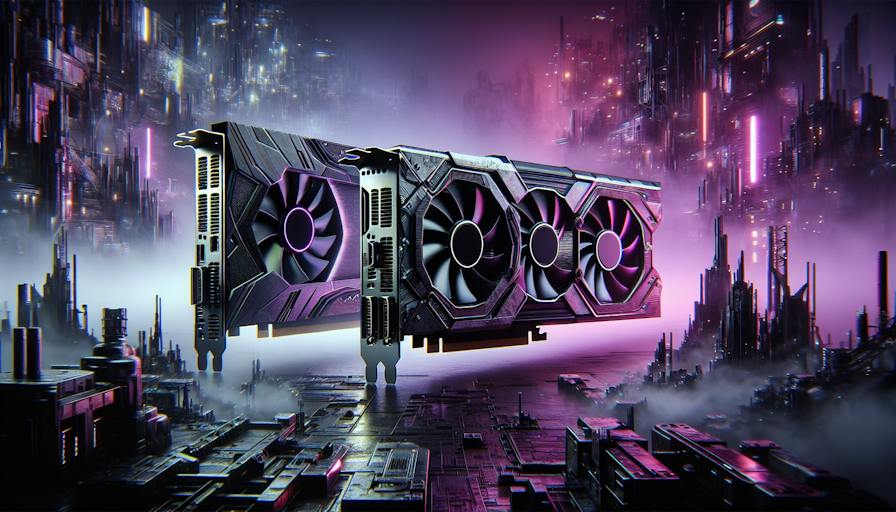
GPU Comparison Overview
Introduction to RTX 4090 and RTX 5090
The NVIDIA RTX 4090 and RTX 5090 are two formidable contenders in the graphics card arena. The RTX 5090 was launched on January 30, 2025, and has quickly established itself as the top graphics card available, suitable for gaming, content creation, and AI workloads. Meanwhile, the RTX 4090, released in October 2022, continues to perform strongly and remains a relevant option for many users. For comprehensive performance insights, check out our resource on rtx 4090 vs rtx 5090 performance.
Pricing and Availability
Pricing plays a significant role in the decision-making process for potential buyers. The MSRP for the RTX 5090 stands at $1,999 for the Founders Edition cards, whereas the Founders Edition RTX 4090 launched at $1,600. However, the RTX 4090 has often been sold at a premium, with prices exceeding $2,000 due to high demand (TechRadar).
| Graphics Card | Launch Price (MSRP) | Current Market Price |
|---|---|---|
| RTX 5090 | $1,999 | $2,000+ (variable) |
| RTX 4090 | $1,600 | $1,500 - $2,000 (variable) |
Both cards are available through various retailers and online platforms. For detailed access information, please refer to our link on rtx 4090 vs rtx 5090 availability.
The RTX 5090 offers 33% more VRAM compared to the RTX 4090, which improves its abilities in areas like AI-powered graphics and next-gen ray tracing tasks (BOXX). For those looking to future-proof their setups or focusing on resource-intensive applications, understanding the differences between these cards can greatly influence purchasing decisions.
Technical Specifications
In this section, a detailed comparison of the RTX 4090 and RTX 5090's technical specifications will be explored, focusing on VRAM, GPU interface, and performance benchmarks.
VRAM and GPU Interface
The differences between the VRAM and GPU interface of the RTX 4090 and RTX 5090 are significant. The RTX 5090 employs cutting-edge GDDR7 VRAM and the new PCIe 5.0 GPU interface. This advancement allows for faster data throughput compared to the GDDR6X VRAM and PCIe 4.0 interface that the RTX 4090 uses (TechRadar).
| Specification | RTX 4090 | RTX 5090 |
|---|---|---|
| VRAM | 24GB GDDR6X | 32GB GDDR7 |
| GPU Interface | PCIe 4.0 | PCIe 5.0 |
| VRAM Increase | - | 33% more |
The RTX 5090 offers 33% more VRAM than the RTX 4090, boasting 32GB compared to the latter's 24GB. This increase is particularly beneficial for tasks such as next-gen ray tracing, AI-driven graphics, and real-time 8K video editing (BOXX).
Performance Benchmarks
When comparing performance, the RTX 5090 clearly outshines the RTX 4090 across various metrics. In synthetic benchmarks, the RTX 5090 is approximately 21% faster than the RTX 4090. This trend continues in gaming performance as well, where the RTX 5090 delivers about 26% higher framerates in 4K gaming scenarios compared to its predecessor (TechRadar).
| Performance Metric | RTX 4090 | RTX 5090 |
|---|---|---|
| Synthetic Benchmark Speed | Baseline | 21% faster |
| 4K Gaming Framerate | Baseline | 26% higher |
| CUDA Cores | 16,128 | 21,760 |
The RTX 5090 houses 21,760 CUDA cores, which is an increase of over 5,300 cores compared to the RTX 4090. This substantial difference contributes significantly to the overall performance uplift observed in various tasks, particularly in the 20 most demanding PC games tested, where the RTX 5090 shows a 33% improvement over the RTX 4090 (Corsair).
For a deeper dive into how these GPUs perform across different benchmarks, refer to our article on rtx 4090 vs rtx 5090 benchmarks and learn more about their specifications.
Feature Variations
AI Performance and Tensor Cores
The advancements in artificial intelligence performance between the RTX 4090 and RTX 5090 are notable. The RTX 5090 delivers a staggering increase in AI computational capabilities, providing up to a 154% enhancement compared to its predecessor (BOXX). With 1676 TFLOPS of tensor FP16 compute and 3352 TOPS of tensor INT8 compute, the RTX 5090 positions itself as an optimal choice for tasks requiring intensive AI computations, such as machine learning and deep learning applications.
| Feature | RTX 4090 | RTX 5090 |
|---|---|---|
| Tensor FP16 Compute (TFLOPS) | N/A | 1676 |
| Tensor INT8 Compute (TOPS) | N/A | 3352 |
| AI Performance Increase | N/A | 154% (2.54X) |
In addition to its enhanced tensor performance, the RTX 5090 boasts a greater number of new-generation RT and Tensor cores, which work in conjunction with the CUDA cores. This combination aids in reducing the impact of ray tracing on performance, making it a highly efficient option for gamers and content creators alike.
Memory Bandwidth and DLSS
Another significant feature in which the RTX 5090 excels is its memory bandwidth and support for NVIDIA's latest Deep Learning Super Sampling (DLSS) technology. The introduction of DLSS 4 utilizes the new Blackwell architecture to enhance frame rates significantly through Multi Frame Generation. This technology allows the generation of up to three frames compared to the previous one frame with DLSS 3, effectively improving the overall gaming experience.
The table below summarises the key characteristics of DLSS as implemented in both generations of GPUs:
| Feature | RTX 4090 | RTX 5090 |
|---|---|---|
| DLSS Version | DLSS 3 | DLSS 4 |
| Frame Generation | 1 | Up to 3 |
| Performance Increase | N/A | 30% more raw performance |
With the RTX 5090's enhancements, users can expect improved FPS and overall gaming performance, making it a compelling choice for those considering the RTX 4090 vs RTX 5090 differences. The new DLSS transformer algorithm, based on AI transformers, further accelerates performance compared to earlier versions and is compatible with all NVIDIA RTX GPUs.
In summary, the advancements in AI performance and features like DLSS highlight the RTX 5090's potential for future-proofing gaming and content creation needs. For a deeper look into performance benchmarks, visit our section on RTX 4090 vs RTX 5090 benchmarks.
Gaming Performance
As gamers seek the ultimate performance from their systems, understanding the distinctions between the RTX 4090 and RTX 5090 is essential. This section focuses on the gaming performance of both GPUs, particularly in rasterized games, ray tracing, and path tracing scenarios.
Rasterized Games Performance
In direct comparisons of rasterized game performance, the RTX 5090 shows a significant advantage over the RTX 4090. With 33% more CUDA cores, the RTX 5090 is designed to deliver improved general rasterization performance Digital Trends.
The following table illustrates the performance uplift in several popular titles at native 4K with maximum settings:
| Game Title | RTX 4090 Performance (FPS) | RTX 5090 Performance (FPS) | Performance Uplift (%) |
|---|---|---|---|
| A Plague Tale: Requiem | 45 | 64 | 42% |
| Dead Space Remake | 55 | 75 | 36% |
| The Last of Us Part I | 50 | 70 | 40% |
| Starfield | 40 | 41 | CPU Limited |
| Final Fantasy 16 | 48 | 67 | 39% |
The RTX 5090 consistently outperforms its predecessor in these titles, providing gamers with an enhanced experience that supports smoother frame rates and higher graphical fidelity.
Ray Tracing and Path Tracing Efficiency
Ray tracing and path tracing represent significant advancements in gaming graphics, and the RTX 5090 excels in these areas as well. When tested with games featuring ray tracing like Hellblade 2 and Star Wars Outlaws, the RTX 5090 demonstrated improvements ranging from 23% to 47% compared to the RTX 4090 DSOGaming.
The table below summarises the ray tracing performance of both GPUs in selected titles:
| Game Title | RTX 4090 Performance (FPS) | RTX 5090 Performance (FPS) | Performance Uplift (%) |
|---|---|---|---|
| Hellblade 2 | 30 | 44 | 47% |
| Star Wars Outlaws | 35 | 43 | 23% |
| STALKER 2 | 40 | 52 | 30% |
| Silent Hill 2 | 28 | 41 | 46% |
In path tracing scenarios, such as in Cyberpunk 2077 and Alan Wake 2, the RTX 5090 exhibits even more striking results, substantially outperforming the RTX 4090 with frame rate increases of approximately 38% and 37% respectively DSOGaming.
| Game Title | RTX 4090 Performance (FPS) | RTX 5090 Performance (FPS) | Performance Uplift (%) |
|---|---|---|---|
| Cyberpunk 2077 | 25 | 34 | 36% |
| Indiana Jones and the Great Circle | 30 | 41 | 37% |
| Black Myth: Wukong | 28 | 39 | 39% |
| Alan Wake 2 | 30 | 43 | 43% |
The RTX 5090's enhancements in ray tracing and path tracing efficiency illustrate its capability to handle even the most demanding graphical workloads, solidifying its position as a more powerful choice for gaming enthusiasts looking to invest in high-performance graphics cards. For further details on the RTX 4090 vs RTX 5090 performance, refer to our benchmark comparisons.


